Friday, 30 September 2016

First Perspective  - Fillipo Brunelleschi and Masaccio


The first known picture to make use of linear perspective was created by Fillipo Brunelleschi who was a architect (1377-1446). It was painted in 1415, the painting was described as the Baptistery in Florence from the front gate of the unfinished cathedral. The perspective gave the illusion of depth onto a two dimensional view using vanishing points. All the lines converged and eye level on the horizon.
Not long after Brunelleschi's painting, the concept caught on and many other artists started to use linear perspective in their paintings which were mainly Italian artists.


Masaccio (1401 – 1428) the first proper painter at the time was the first artist who demonstrated full command of the new rules of perspective. His work had great volume, the buildings and landscapes realistically go into the distance.
Image result for Filippo Brunelleschi and Masaccio

Friday, 23 September 2016

GALLERIES VISITED


This summer I went to Birmingham to visit art galleries. The BMAG displays lots of traditional work. However, two rooms were more modern, rooms 21 and 22.

I also visited the Ikon, which was in my opinion fascinating, showing unusual thought provoking pieces of work. There were some brilliant artists, Jesse Bruton was a favourite, the works of art were enormous and the artists work was situated in most of the top floor rooms. All black/grey with maybe one line only. This was weird and exciting. I liked the different textures and even when they were smooth they appeared to have texture. I think that I will explore painted, non-textured work but I did like the energy his work created. People were literally sat in the gallery and just staring! Each painting was like a big, massive rectangle with just a simple, flowing, horizontal line. The line was like a road and people looked like they were almost mediating. I especially loved the scale of the work and I intend making large creations this year.


Wednesday, 21 September 2016

From research I have found that the easiest way to explain one point perspective is a drawing method that shows how things appear to get smaller as they get further away, converging towards a single point on the horizon line. When something is travelling away from the viewer going towards a single Vanishing point this is a point that is located directly in front of the viewer’s eyes on a horizon line which is the eye level line.
Image result for one point perspective
Artist: Mars 1


Mario Martinez


Mario Martinez creates imaginary worlds, his inspiration comes from surrealism, street art and abstract expressionism. Martinez creates amazing pieces all composed from space, planet like landscapes which are filled with light effects, floating orbs and other flying geometric shapes. His ideas come from physics, from creativity in the brain, biological processes and the mystery of life itself. Everything he does he creates through imagination and what something will look like using colourful geometric and organic shapes and then layers them with patterns and textures.


Image result for mars 1


Friday, 16 September 2016


Art Before Perspective


Before the 14th Century there were not many people who knew or had learnt what three dimensional art is.


WHY NO PERSPECTIVE?
When people attempted to create perspective, they could imagine what they wanted to create in their mind but found it difficult to translate this onto paper.  People found it difficult to create the illusion of depth and space.
When the artists were attempting the perspective, they struggled with the lack of mathematical understanding. This comes from a lack of understanding about mathematical angles which affects the whole piece. It will effect lighting, positioning and how the concept works.
There were no learning aids like books, photography or the internet to show people how to create perspective or that it could be achieved.


WHERE WAS THERE PERSPECTIVE?


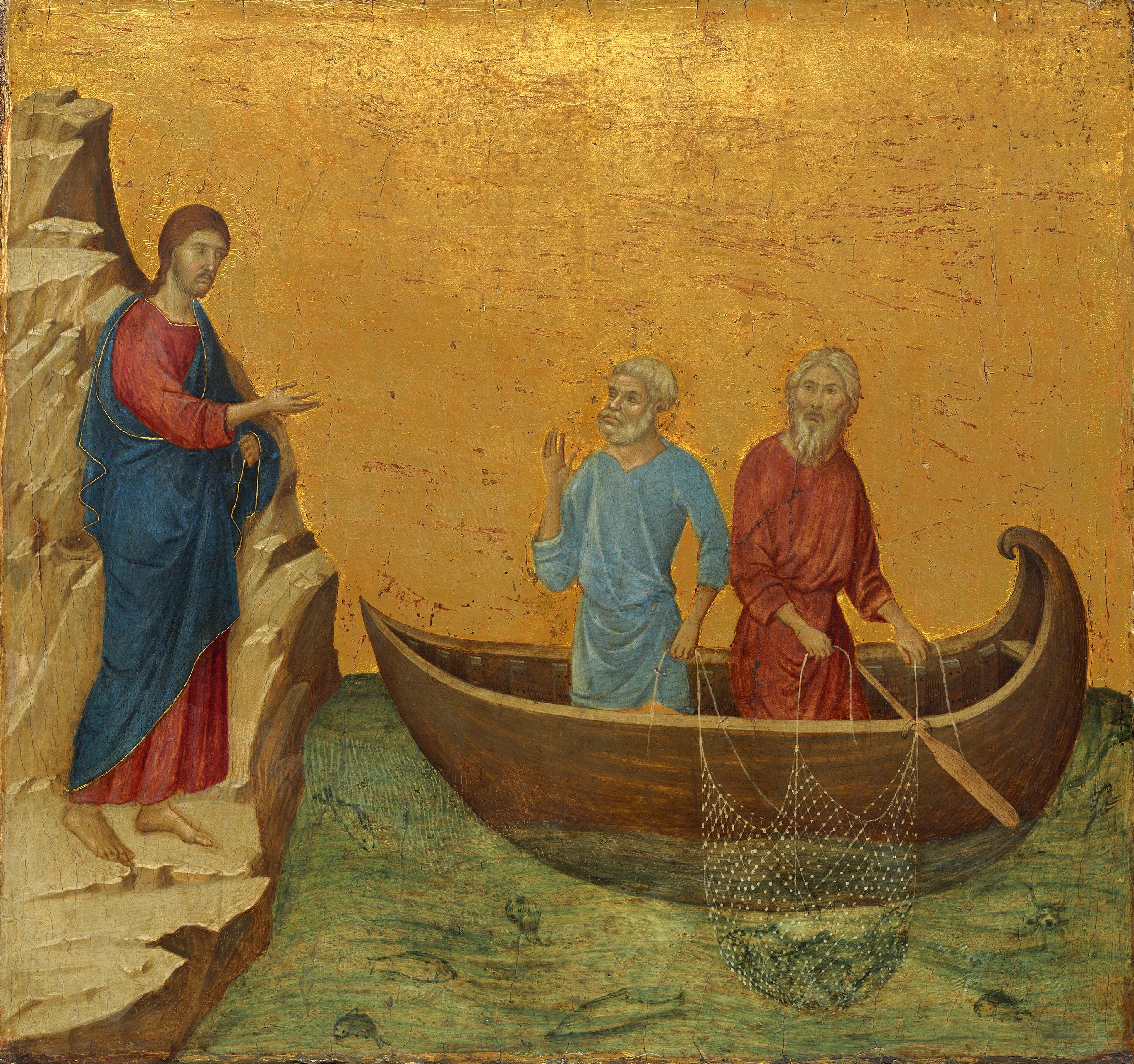
The artists who tried to attempt the early forms of perspective were Giotto (1267 - 1337) and Duccio (1255 - 1260 - 1318 - 1319). They began to explore the idea of depth and volume in their art and introduced an early form of perspective. There was no dimensional perspective and no liner perspective which is why they didn't know where to do the horizontal line, which they could of then done the background. The eye level was incorrect and gives the look of trying to see too much perspective. It gives no proper perspective from the head line.
The artist of the painting below had some understanding of the rock face appearing to come towards you. The eye level of the two fishermen is also on a horizontal which means that they are beginning to understand space. He would need to place the eye line on the horizon to agree perspective. Which I have done in my sketch pad.


Image result for duccio


Wednesday, 14 September 2016

The History of Perspective


Perspective is like an illusion, it starts with a two-dimensional surface which is normally on board, paper, canvas and walls. Paints, pastels, pen and pencil are used when creating the illusion.  This will give the viewer a perspective where it's dimensional or 3-D or your in an actual world.


The illusion happens when dimensions clash and it can give an impression of space, depth or movement. It is all created from using angles and different viewpoints.


Image result for perspective art

Tuesday, 13 September 2016

Bridget Riley is an artist I came across from researching artists online. My first impression of Bridget Riley's work was how great the illusions were and I wondered how she had created them.  I decided to find out more about her work and start understanding how she made these effects in her art.
I found out that Bridget Riley began her exploration of abstract painting in the 1950s, when she was interested by the optical effects in the works of the 19th-century pointillist Georges Seurat. She explored optical phenomena and juxtaposes colour either by using a chromatic technique of identifiable hues or by selecting achromatic colours (black, white or grey). This became a really successful technique for her and really stood out and worked very well. It gave a closer and outer perspective using different colours.
Bridget Riley mixes her colours to get the exact hue and intensity for the pieces she's working on. She explores with colours a lot to see if they blend or contrast with one another. This is what gives the perspective effect. Bridget Riley first marks her work up on a large canvas and then paints the piece entirely by hand, first in acrylics, then in oil.
What Bridget Riley looks for is finding visual effects and wanting people to feel that the painting is moving but actually isn't. Some of Bridget Riley's work shows different kinds of visual effects from shaking, moving up and down to side to side.


'Movement in Squares' this is one of Bridget Riley's pieces created in 1961. In this piece she only uses squares, when you look at the piece you get a feeling like the squares are coming towards your or going further away from you. All of the squares stay the same but it's just the width which changes which gives the optical effect.